


Serial and modular construction: terms and differences
Pacarada Modular Building Systems, Kelkheim (Taunus), Germany · Last updated: October 2026
Serial construction means that buildings or parts of buildings are designed to a repeating pattern and produced in series. Modular construction means that the building is assembled from prefabricated components or room modules. The two belong together, but they are not the same thing. Serial describes the repetition, modular describes the method.
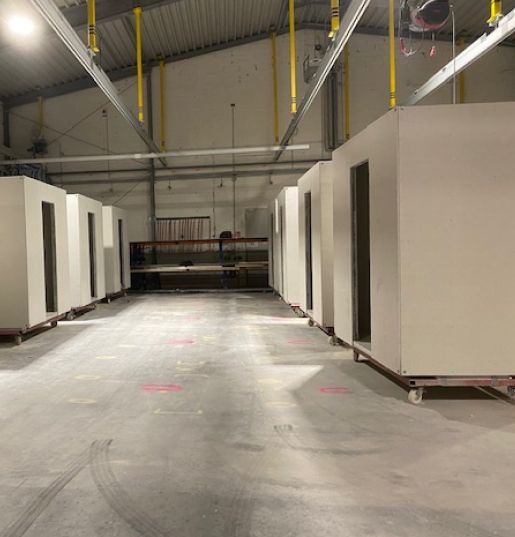
What serial construction means
In serial construction a building type, a floor plan or a component is developed carefully once and then used many times. The design does not start from scratch for every project. This saves design time, makes costs predictable and allows production at consistent quality. Serial construction can also be conventional, for example when the same house is built several times from the same drawings.
What modular construction means
In modular construction the parts of the building are made in a factory: as columns and beams (1D), as wall and floor elements (2D) or as finished room modules (3D). They are assembled on site. When the modules are produced in series, the two approaches come together. In Germany this is called serial and modular construction (serielles und modulares Bauen).
The terms at a glance
| Term | Meaning |
|---|---|
| Serial construction | Repetition: one type, floor plan or component is used many times |
| Modular construction | Method: the building is assembled from prefabricated components or room modules |
| System building | Building with a coordinated system of defined components and connections |
| Room module (3D) | A largely fitted-out room made in the factory and transported as one unit |
| Panelised construction (2D) | Flat wall and floor elements that are joined into rooms on site |
| Type approval | A German approval for a building or building system that is to be erected at several locations |
More terms are explained in the modular construction glossary.
Why serial and modular construction is in demand
Germany is short of housing, skilled workers on building sites are scarce and construction costs are high. Serial and modular construction addresses all three: work moves into the factory, processes repeat, and the time on site becomes shorter. The federal government, the states and the housing industry therefore actively support this approach.
One example is the framework agreement “Serielles und modulares Bauen 2.0” of the German housing industry association GdW, concluded in 2023 with the support of the Federal Ministry of Housing and the construction industry. Housing companies in the GdW can call off complete housing concepts from it without tendering each project separately across Europe. The German model building code also provides for a type approval for buildings that are erected at several locations. More on this in the article Building permits for modular buildings in Germany.
Series production does not mean identical buildings
The most common objection is that serially built houses all look the same. They do not have to. What repeats is what you do not see: grid, structure, connections, bathrooms and building services. Facade, roof shape, mix of floor plans and finishes are designed for each project.
The Pacarada Modular Building System is designed for this. All components are joined at the Cube, an internationally patented steel connection node. The node stays the same, the building does not: columns and beams, wall and floor elements and room modules can be combined in one building, in steel, timber and concrete, from 1 to 50+ storeys.
Which buildings benefit from series production
- Housing and student accommodation: many similar apartments, bathrooms and kitchens.
- Schools and nurseries: classrooms and group rooms on a grid, extendable later.
- Hotels, care and healthcare buildings: many identical rooms with bathroom.
- Added storeys: the same modules on several buildings of an existing estate.
Darmstadt example: When an office building in Darmstadt was converted into 197 homes, prefabricated bathroom modules were installed. The conversion was 44% faster than conventional construction. An overview of all applications is on the 18 building types page.
Frequently asked questions
What is the difference between serial and modular construction?
Serial describes repetition: a building type, floor plan or component is used many times. Modular describes the method: the building is assembled from components or room modules prefabricated in a factory. When modules are produced in series, this is called serial and modular construction.
Do serially built buildings all look the same?
No. What repeats is mainly the grid, structure, connections, bathrooms and building services. Facade, roof, mix of floor plans and finishes are designed for each project.
Is serial construction only for housing?
No. It suits any building with many similar rooms: apartments, student flats, classrooms, hotel and care rooms or offices. The Pacarada Modular Building System covers 18 building types.
More articles in the modular building guide
- Modular or conventional construction? A comparison
- Adding storeys and extensions with modular construction
- Modular schools and nurseries
- Steel modular and hybrid construction: steel, timber and concrete combined
- What drives the cost of modular construction
- Building permits for modular buildings in Germany and type approval
- Fire protection and sound insulation in steel modular construction
- Office to residential: conversion with modular construction
- Funding for modular buildings in Germany: KfW, QNG and state programmes
- Back to the overview: modular building guide
Planning a project? Send us your enquiry, ideally with drawings. You will find all system data on our Facts and figures page.